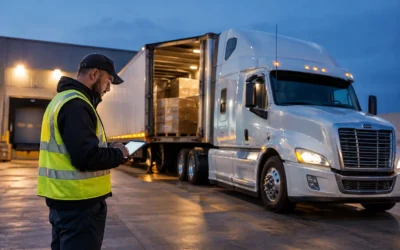
A crew is waiting, a production line needs a part, or a customer has booked a delivery window that cannot move. In those moments, curtain side applications can make the difference between a straightforward unload and a costly delay. A curtain side trailer gives commercial shippers broad side access to freight while retaining the weather protection of an enclosed trailer. For many loads moving through British Columbia and select Alberta routes, that flexibility is exactly what keeps work moving.
Curtain side service is not the right answer for every shipment. But when freight is palletized, long, awkward to load from the rear, or headed to a site with limited dock access, it is often one of the most practical choices available.
Where Curtain Side Applications Deliver Real Value
The main advantage of a curtain side trailer is access. Rather than loading or unloading only through rear doors, the side curtain can be opened to expose most of the trailer length. A forklift can approach from either side, and a crane or telehandler can place freight where it needs to go without working around fixed trailer walls.
That matters at active construction sites, industrial yards, manufacturing facilities, and distribution locations where dock space is not guaranteed. It also reduces unnecessary handling. When a shipper can load freight in the right sequence and position from the start, the receiving team spends less time shifting product to reach the last pallet or bundle.
Common curtain side applications include building materials, packaged steel, fabricated components, palletized equipment, machinery parts, agricultural supplies, pipe, lumber products, and industrial goods that need protection from rain, road spray, and debris. Loads vary widely, so the equipment decision should start with the freight itself, not a standard shipping routine.
Building Materials and Construction Supply
Construction schedules do not leave much room for freight that arrives late or cannot be unloaded efficiently. Curtain side equipment is well suited to dry building materials, insulation, wrapped lumber, siding, doors, windows, scaffolding components, and crated job-site supplies.
The side opening is especially helpful when a forklift is working from a rough or restricted staging area. Instead of requiring a clear path behind the trailer, the receiver may be able to unload along the side. That can be useful on crowded commercial builds, road projects, and industrial expansions where equipment, trades, and material deliveries are all competing for space.
Protection matters here as well. Many building products must stay dry during transport, but they do not necessarily require a fully enclosed van with rear-only access. A properly secured curtain side load offers a practical middle ground.
Manufacturing Parts and Production Freight
A missing component can stop far more than one shipment. It can hold up fabrication, delay an assembly line, force overtime, or put a customer commitment at risk. Manufacturers often use curtain side transport for palletized parts, fabricated steel, tooling, packaged components, and production materials that need prompt pickup and direct delivery.
For this type of freight, timing is not the only issue. The load must arrive in usable condition and in the order the receiver expects. Accurate dimensions, weight, piece count, pickup readiness, and delivery contact details help a carrier match the right truck and plan the load properly.
If your shipment is needed for a scheduled production run, say so when requesting a quote. A carrier needs to know whether the delivery appointment is fixed, whether after-hours receiving is available, and whether the load is needed first thing in the morning rather than simply sometime that day.
Equipment, Machinery, and Industrial Materials
Curtain side trailers are often a strong option for equipment that is too large or awkward for rear-door loading but still needs protection in transit. Skidded pumps, generators, compressors, electrical assemblies, packaged mechanical equipment, and industrial components may be loaded from the side by forklift or lifted into position by crane.
That does not mean every machine belongs behind a curtain side. Height, width, weight distribution, securement points, and center of gravity all need review. An oversized unit, a piece requiring top loading, or freight that must remain exposed for specialized handling may be better suited to a flat deck or another configuration.
The right answer depends on the actual shipment. Sending photos, dimensions, weights, and details about how the freight can be loaded gives the dispatch team the information needed to make a sound recommendation before a truck arrives.
Why Side Access Can Protect Your Delivery Schedule
Freight delays are often created at the loading or receiving point, not on the highway. A trailer may arrive on time but lose an hour because the dock is occupied, the rear approach is blocked, or the receiver cannot reach freight positioned at the front of the trailer.
Curtain side access provides more options. A forklift can work beside the trailer, and multiple sections of freight may be accessed without unloading the entire shipment. For multi-stop loads, that can be useful when freight is arranged in delivery sequence and each receiver needs fast access to its portion.
There is a trade-off. Side loading requires enough clear space for the forklift, operator, and load. The site also needs a safe, stable working surface. A curtain side trailer is not a shortcut around poor loading conditions. It is a tool that works best when the shipper and receiver have planned the site access, equipment, and handling process in advance.
What to Confirm Before Booking a Curtain Side Truck
A clear shipment request helps prevent last-minute equipment changes and missed pickup windows. Start with the total weight, number of pieces, length, width, height, and packaging type. Include whether the freight is palletized, crated, bundled, or placed on skids.
Next, explain how the load will be handled at both ends. Is there a loading dock, forklift, crane, telehandler, or ground crew? Can the freight be loaded from the side? Does the pickup location have a gate, appointment requirement, restricted hours, or limited turning room? These details affect both equipment selection and dispatch timing.
Securement needs deserve the same attention. Freight must be stable, protected from movement, and suitable for transport under the curtain side. The curtains provide weather coverage, but they are not a substitute for proper load securement. Items with sharp edges, loose packaging, or unusual profiles may need additional protection and planning.
Finally, identify the deadline that matters. “Urgent” means different things to different operations. A required-by time, a receiving appointment, and a production shutdown deadline are much more useful than a general request for fast service.
When Another Trailer Configuration Is the Better Call
A curtain side trailer is versatile, but it should not be selected by habit. Flat deck service may be the better fit for freight that needs crane loading from above, exceptionally wide or tall loads, or materials that do not require weather protection. Gooseneck, tridem, and Super B configurations may also be more appropriate when weight, volume, or route requirements call for greater capacity.
Hot Shot Delivery Service reviews each commercial shipment based on its dimensions, weight, handling needs, and delivery schedule. That practical review matters because the cheapest-looking option is not always the option that protects your timeline. The goal is to send equipment that can load safely, travel efficiently, and unload without creating a problem at the destination.
Plan the Freight, Then Dispatch With Confidence
The best curtain side applications begin with a simple question: what will it take to load, secure, transport, and unload this freight without losing time? Answer that honestly, and the equipment choice becomes clearer.
If you have a time-sensitive shipment moving in British Columbia or toward select Alberta destinations, provide the freight details early and request a reviewed quote. A few minutes of accurate planning can help keep your material, equipment, and production commitments moving when the delivery window is tight.