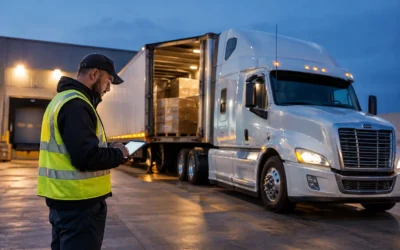
A truck can arrive at the gate exactly when promised and still lose hours before it leaves. That is why asking what affects truck turnaround time is not just a transportation question. For operations teams, it is a production schedule question, a labor question, and often a customer commitment question.
Truck turnaround time is the total time required to complete a pickup or delivery stop, from arrival through release. A fast turnaround protects available truck capacity and keeps freight moving. A slow one can push a driver into traffic, delay the next pickup, and put a tight delivery window at risk.
What Affects Truck Turnaround Time Most?
The biggest causes usually happen before the truck arrives: unclear shipment details, an unprepared loading area, unavailable site staff, or paperwork that does not match the freight. Weather, road conditions, equipment issues, and last-minute changes can also matter, especially on routes through British Columbia where mountain passes, construction zones, and seasonal conditions affect travel time.
Some delays are unavoidable. A safety issue, damaged packaging, or a load that must be re-secured should be addressed before the truck rolls. The goal is not to rush past necessary checks. It is to remove preventable waiting time while loading and unloading freight safely.
Appointment Times and Site Access
An appointment time only works when the receiving or shipping site is ready to act on it. A truck that arrives for an 8:00 a.m. pickup may still wait if the gate is not staffed, the dock is occupied, or the contact person has not been told the truck is coming.
Site access matters just as much. Drivers need accurate gate instructions, entry codes where required, a clear delivery address, and the name and phone number of the person receiving the shipment. Large industrial properties, construction sites, mills, and warehouses can all have different check-in procedures. A wrong entrance or unclear staging direction can quickly turn a short stop into a long one.
For urgent freight, provide the carrier with arrival instructions when the job is booked, not after the truck reaches the property. This gives dispatch time to confirm the plan and helps the driver approach the site prepared.
Freight Readiness at Pickup
A shipment is not ready because it is close to the loading area. It is ready when it can be safely loaded, counted, secured, and released without waiting for materials, equipment, or approval.
Palletized freight should be wrapped and stable. Equipment should be disconnected or prepared for transport. Loose materials need suitable packaging. Flat deck shipments need enough access for loading equipment and adequate space for the driver to inspect securement. If freight requires tarping, special straps, chains, corner protection, or a particular loading sequence, that information should be shared in advance.
Weight and dimensions are critical. A carrier needs the correct total weight, piece count, length, width, height, and any unusual handling requirements. A load described as 12,000 pounds can create a major problem if it is actually 18,000 pounds or if the dimensions require a different truck configuration. Correct details allow dispatch to send the right equipment the first time.
At Hot Shot Delivery Service, that may mean matching the freight to a flat deck, curtain side, tridem, gooseneck, or Super B configuration based on the load, route, and required capacity. The right truck helps prevent rework at the dock and supports a faster release from the site.
Loading Equipment and Labor Availability
A carrier can supply the truck and driver, but the shipper or receiver often controls the forklift, crane, loading dock, and warehouse labor. If the forklift operator is on break, the crane is committed to another lift, or the dock crew is handling an earlier shipment, turnaround time will grow.
Before pickup, confirm who is loading the freight and when that equipment will be available. The same applies at delivery. If a job requires a crane, telehandler, forklift, dock leveler, or crew to unload by hand, it should be arranged before the truck is dispatched.
There is a trade-off here. Keeping loading equipment fully utilized can help a busy facility, but overbooking every dock or crane leaves no room when a truck arrives early, a prior load runs long, or conditions change. A small amount of schedule flexibility often protects the entire day.
Paperwork and Release Delays
A truck cannot always leave as soon as the freight is on board. Bills of lading, packing slips, delivery tickets, purchase order references, customs documentation where applicable, and site release forms may all be required before departure.
Missing paperwork creates more than administrative work. It can leave freight sitting on a truck while staff search for approvals, verify quantities, or correct a destination. For time-sensitive freight, prepare documents before the vehicle arrives and make sure the driver receives the correct pickup and delivery references.
The contact information on the paperwork should also be current. If a receiver needs a delivery appointment, special unloading instructions, or advance notice, dispatch needs to know before the truck is already on the road. Clear documents reduce calls, prevent disputed deliveries, and give everyone a record of what moved and when.
Load Securement and Safety Checks
Securement takes time for a reason. On a flat deck or open-deck load, the driver must inspect the freight, place chains or straps correctly, protect sharp edges where needed, and make sure the load remains stable for the road ahead. A heavy machine, long steel product, building material, or awkward industrial component cannot be treated like a standard pallet shipment.
Site conditions also affect this process. Rain, snow, ice, mud, poor lighting, high winds, and crowded yards can slow loading and securement. So can freight that was not packaged or positioned for safe handling. These are not delays to cut around. They are conditions to plan for.
The best way to reduce time here is to provide accurate freight details and give the driver a safe, level area to inspect and secure the load. When a shipment needs special handling, say so during the quote process. A clear plan is faster than a rushed correction at the loading point.
Delivery Conditions Can Change the Schedule
A truck may leave pickup on time and still face a slow delivery. Receiver hours, road construction, traffic, weather, restricted access, congestion at a jobsite, and a backed-up dock can all change the final turnaround.
This is where regional route knowledge makes a practical difference. A route that looks short on a map may involve a mountain pass, a busy urban corridor, ferry timing, or a seasonal construction delay. For freight moving across British Columbia and select Alberta routes, travel planning needs to account for real road conditions, not just distance.
Receivers can help by confirming their delivery hours, unloading capacity, and any site restrictions before the shipment leaves. If a delivery must happen within a narrow window, build in time for check-in and unloading rather than treating the arrival time as the finish line.
How Shippers Can Improve Truck Turnaround Time
The strongest improvement is simple: give the carrier complete information early, then make sure the freight and site are ready at the scheduled time. Confirm the shipment description, weight, dimensions, pickup and delivery contacts, equipment needs, access instructions, and required paperwork before dispatch.
Communication also matters when plans change. If the freight will not be ready, the dock is down, the receiver has moved the appointment, or the load quantity has changed, notify dispatch immediately. Early notice gives the carrier a chance to adjust the truck, route, or pickup sequence. Last-minute surprises reduce options for everyone.
For recurring shipments, review the stops that regularly cause delays. A consistent issue may be solved by changing the appointment time, pre-staging freight, assigning a backup forklift operator, or creating a standard site instruction sheet. Small changes at one dock can protect an entire day of deliveries.
When production is waiting on materials or a customer is expecting a critical shipment, reliable turnaround starts with a workable plan at both ends of the move. Put the right details in front of dispatch, prepare the freight before the truck arrives, and give the driver a clear path in and out. That is how tight deadlines stay manageable.