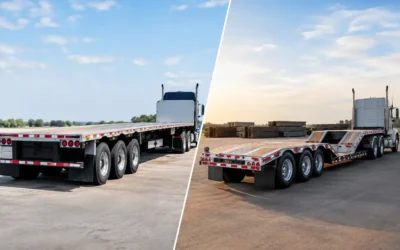
A pallet is only as ready as its securement, and a delivery is only successful if it arrives when the receiving crew, crane, forklift, or production line is ready. Flatbed pallet transport gives BC businesses a practical way to move freight that is oversized, heavy, awkwardly shaped, or better loaded from the side or above. But the open-deck advantage also means the shipment needs clear planning before the truck arrives.
For construction materials, industrial components, fabricated steel, machinery parts, packaged products, and palletized supplies, the right equipment and pickup timing can keep a job moving. The wrong plan can leave freight waiting, crews standing by, or a customer facing a missed commitment.
When Flatbed Pallet Transport Is the Right Fit
Flatbed pallet transport is not simply a matter of placing pallets on an open trailer. It is a freight solution for loads that need accessible loading, flexible deck space, or capacity beyond what a van trailer can comfortably handle.
A flatbed is often the right choice when pallets are too wide or too tall for enclosed equipment, when a forklift needs side access, or when loading requires a crane. It also works well for products that need to move quickly from a yard, plant, warehouse, or job site without the constraints of loading through rear doors.
That said, open-deck freight is not the best answer for every shipment. If the product cannot be exposed to weather, a curtain-side configuration may be a better fit. Curtain sides provide side-loading access while offering more protection from rain, road spray, and debris. The right choice depends on the product, packaging, loading method, route, and delivery conditions.
For deadline-driven freight, that decision should be made before dispatch, not when the truck is already at the dock.
Start With the Freight Details That Affect the Quote
A clear quote begins with accurate shipment information. Weight matters, but it is not the only number that determines the truck and trailer required. A palletized load can be within a vehicle’s payload limit and still need a different configuration because of its total deck length, height, width, or center of gravity.
When requesting a flatbed pallet transport quote, provide the number of pallets, dimensions of each pallet, total shipment weight, pickup and delivery addresses, and the date and time the freight will be ready. Let the carrier know whether loading or unloading will be done by forklift, crane, pallet jack, or by another method.
Details about the product are equally useful. Is it bagged material, bundled pipe, crated equipment, steel fabrication, lumber, or a mixed pallet load? Does it require tarping? Can it be stacked? Are there any sharp edges, loose items, overhangs, or fragile sections that need extra attention?
This information helps prevent a common problem: dispatching a truck that can legally carry the weight but is not the right platform for the load. It also gives the driver a better chance to arrive prepared with the necessary securement and protection plan.
Securement Is Part of the Delivery, Not an Afterthought
On an enclosed trailer, the walls and interior layout can provide some control over freight movement. On a flatbed, securement must be planned for the specific load. Pallets should be stable, wrapped or banded where appropriate, and built to withstand normal highway movement.
A pallet that is stable in a warehouse is not automatically ready for the road. Uneven weight distribution, damaged boards, poor stacking, and loose packaging can create problems before the truck reaches the highway. If a load shifts, it can affect safety, damage product, and delay delivery.
For best results, make sure pallets are accessible for loading and positioned so the weight can be distributed properly across the deck. Keep paperwork available, confirm whether tarps are required, and advise the carrier of any site rules before pickup. If the freight has unusual dimensions or handling requirements, send those details early rather than relying on a verbal description at the dock.
The carrier will determine the appropriate securement method based on the load and applicable requirements. Your role as shipper is to provide an accurate picture of what is being moved and make sure the product is packaged for commercial transport.
Match Capacity to the Job
A responsive freight carrier should have more than one answer for pallet transport. A smaller urgent shipment may need a 5-ton flat deck truck with capacity up to 15,000 pounds. Larger industrial loads may require a tridem, gooseneck, or Super B configuration, with capacity reaching up to 90,000 pounds when the load, route, and legal requirements allow.
More capacity is not always better. Sending an oversized truck for a smaller shipment can add cost and complicate access at tight delivery sites. On the other hand, trying to fit a large or heavy pallet load onto insufficient equipment creates unnecessary risk and may require a last-minute change.
The best fit comes from reviewing the full shipment: weight, dimensions, number of pallets, loading equipment, delivery access, and time requirement. A job site with narrow access may need a different approach than a paved distribution center. A late-afternoon delivery to an active construction site may need more coordination than a standard warehouse appointment.
This is where local operating experience matters. Familiarity with regional highways, industrial areas, mountain routes, and common delivery conditions across British Columbia helps a carrier plan for real conditions instead of treating every shipment like a dock-to-dock move.
Timing Protects More Than the Freight
For many shippers, the true cost of a late delivery is not the freight charge. It is a stalled crew, a missed installation window, a production line waiting on materials, or a customer whose order cannot ship on time.
That is why pickup readiness matters. If the truck arrives at 9:00 a.m., the pallets should be counted, packaged, staged, and ready to load. If there is a specific cutoff at the receiving location, share it at the quoting stage. If the site requires a delivery appointment, personal protective equipment, a safety orientation, or advance notice, make that part of the dispatch plan.
Just-in-time service works when both sides have reliable information. The shipper knows when the product is ready. The carrier knows the handling requirements and delivery window. The receiver knows what is arriving and has the people or equipment available to unload it.
Hot Shot Delivery Service works with commercial customers who cannot afford uncertainty around pickup and delivery. For a time-sensitive pallet load, direct communication and a reviewed quote provide a better starting point than guessing at equipment or hoping a standard freight option will fit the job.
A Better Checklist Before Pickup
Before arranging transport, confirm four practical points:
- The pallet count, dimensions, total weight, and freight description are accurate.
- The freight is packaged, stable, and ready for highway movement.
- Loading and unloading equipment are available at the scheduled times.
- Pickup and delivery contacts, site instructions, and required appointments have been provided.
These basics reduce avoidable delays. They also allow the carrier to assign equipment that suits the load rather than making adjustments after dispatch.
Plan the Load Around the Delivery Window
The strongest flatbed pallet transport plan starts with the delivery requirement and works backward. Ask when the receiver can accept the freight, what equipment will unload it, and what happens if it arrives early or late. Then set pickup timing, truck configuration, and securement expectations around that reality.
A well-prepared pallet load does more than travel safely. It reaches the site in a condition the receiver can use, at a time that keeps the next part of the job moving. When the schedule is tight, send the shipment details early, request a reviewed quote, and give the dispatch team the information needed to deliver with confidence.